


News Release
Industrial
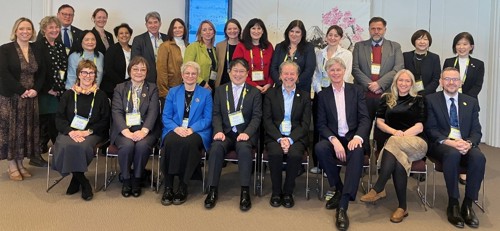
ANMF attends the ICN International Workforce Forum in Yokohama
17 March 2026Kristen Wischer, ANMF Senior Federal Industrial Officer
I had the privilege of attending the ICN International Workforce Forum (IWFF) and Japanese Nursing Association (JNA) Summit in early February on behalf of the ANMF. The events were hosted by JNA in Yokohama, just south of Tokyo.
Nursing Association representatives from Canada, Ireland, Italy, Japan, Norway, Sweden and the UK attended the IWFF to share country reports about the biggest issues facing nurses and reports were passed on from New Zealand and the USA. We estimated some 3.6 million nurses were represented in the room.
What was striking was the similarity of issues we all face in attracting and retaining nurses to the profession. No country was unaffected by the impact of nursing shortages, reflecting the global shortage of nurses, currently estimated at 5.8 million in the context of extremely unequal distribution of nurses across the world. The call for safe staffing levels is universally held as a priority, together with reducing occupational violence, and building career and wage structures that recognise skill and expertise.
As hosts, JNA lead discussion about the challenges faced in providing sustainable staffing for nightshifts, which are commonly 16-hour shifts in Japan, with 8-hour day shifts. All nurses are expected to work night shifts, except where legislation provides exemptions, including for pregnant employees and mothers in the first six years of child rearing to refuse night shift.
The major theme of both IWFF and the Summit was to explore flexible ways of working that may assist in reducing the burden of nightshift and to attract and retain nurses across all stages of their working life. This discussion led to the sharing of policies and strategies from different countries that have assisted in making nightshift more palatable.
Lots of ideas were shared, about shift patterns, such as the Australian model of day, afternoon and night and ensuring sufficient days off between night shifts. Shift loadings, or increased hourly rates were common, but varied considerably across countries.
Sweden provided a powerful account of its campaign to improve the experience of nightshift for Swedish nurses. The campaign drew on evidence of the negative health impact of doing more than two nights in a row, including an increase in the risk of breast cancer. Members submitted drawings and comments from their children, who illustrated in their own words how much they missed mum or dad when they were away on nightshift.
Sweden won its campaign and entered a new country wide enterprise agreement, which is now the basis for a European campaign. The agreement provides that where a nurse performs 30% or more rostered shifts as nightshifts, their full-time hours are reduced from 38 hours to 34 hours, without loss of pay.
The theme of flexibility was expanded at the JNA Summit, an event for nurse leaders from across Japan to gather and hear from JNA officials, politicians and policy makers on the challenges and proposed solutions for creating more flexible approaches to nursing work in Japan.
I was proud to be part of a panel presenting on workforce flexibility and to give an overview of some recent developments in Australia that support flexibility for nurses across different life stages and career points.
Being part of the IWFF and JNA Summit, was a wonderful opportunity to learn from other nursing associations and unions. We have much in common but also our distinct country identities, challenges and solutions. Combined with the exchange of cultural connection the experience was truly memorable.

Stay up to date
Sign up to the ANMF website for national updates, campaigns and educational opportunities. We promise not to inundate your mailbox!